

THE CONTENTS
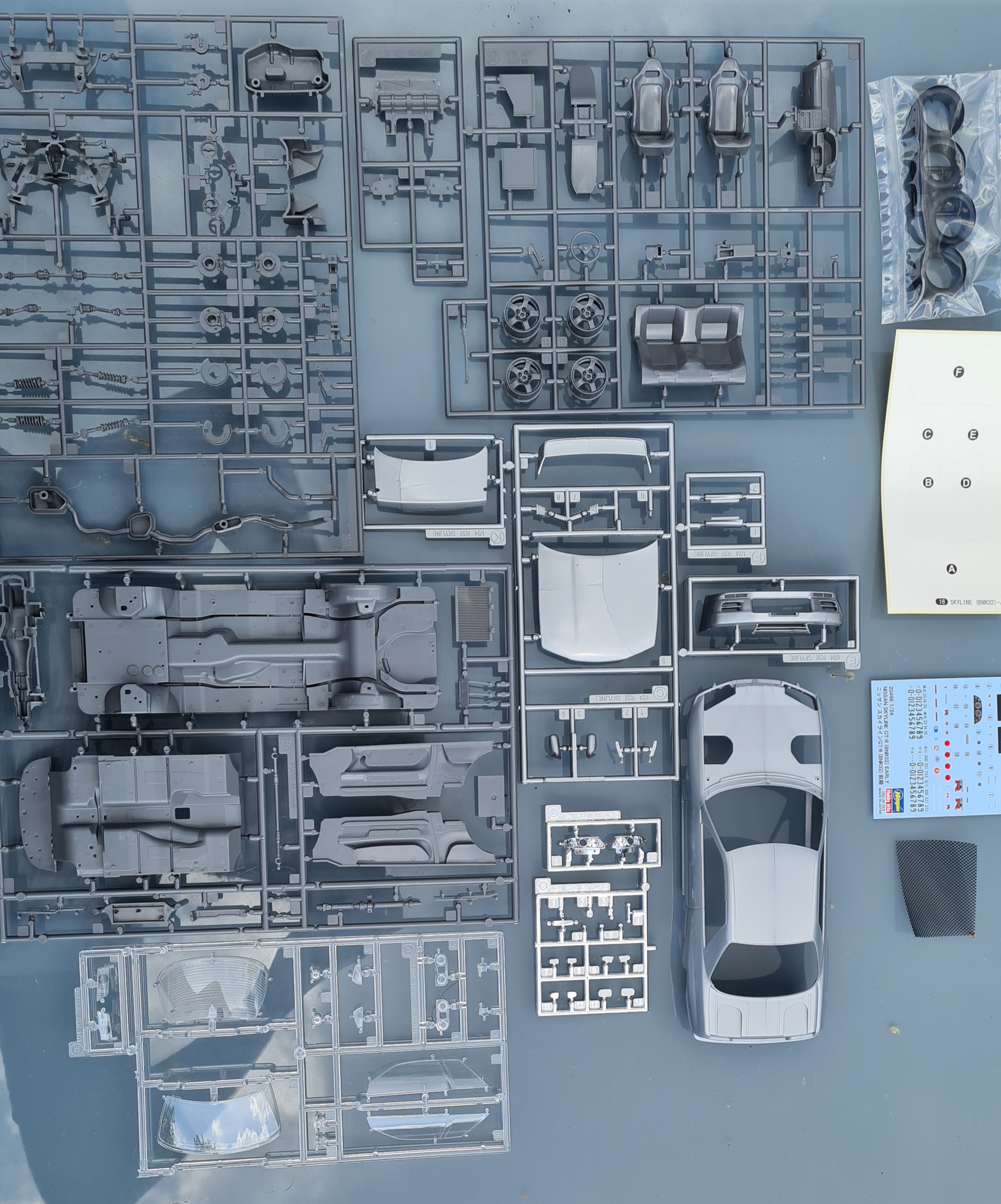

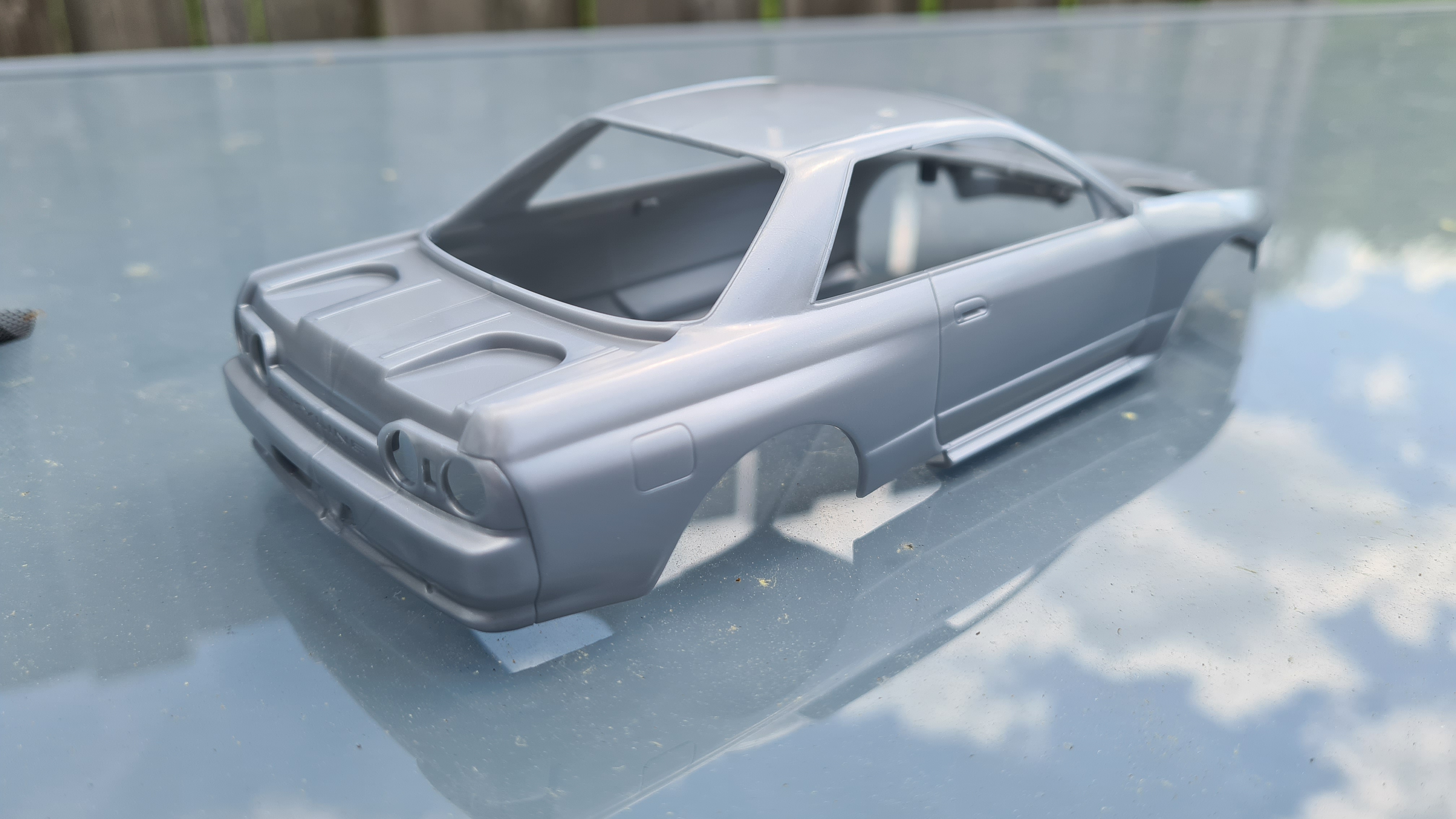
Now to the content. What we got here is Hasegawa’s second foray into the BNR32 generation of the Nissan Skyline. The lesser seen version thereof though equally recognizable, the non-NISMO variant as it predates it by a year and a half in terms of model year. That means this kit will have a non-NISMO bumper, all smooth and lacking the twin vents for the intercooler and has smooth rocker panels opposed to the NISMO flared kinds. That’s basically the difference between the two kits, in all honesty. Hasegawa’s already proven straight off the bat that they’re doing this properly and this has been quite well received by the happy fans who had to make do with the rather aged(though with a full engine) Tamiya kit, or the shoddily designed mass-produced Fujimi kits. Having seen how Hasegawa tends to flood the market with every possible version, currently as of writing in January 2022 sitting pretty at three street versions and three more JTC versions. The ’91 R32 GT-R NISMO was released in December 2020, the ’89 R32 GT-R, which is this one was released in April 2021 and the updated headlight model of ’91 non-NISMO variant was released just a week ago in late December 2021. And there’s the aforementioned JTC types like the legendary black and red STP Taisan Skyline, the all green(where the updated headlamps stem from) Kyodo Oil variant, the AXIA Skyline which is the all silver GT-R with the 1990s TV show intro graphics all over and coming soon is the ’91 Spa 24 hours winner ZEXEL Skyline.
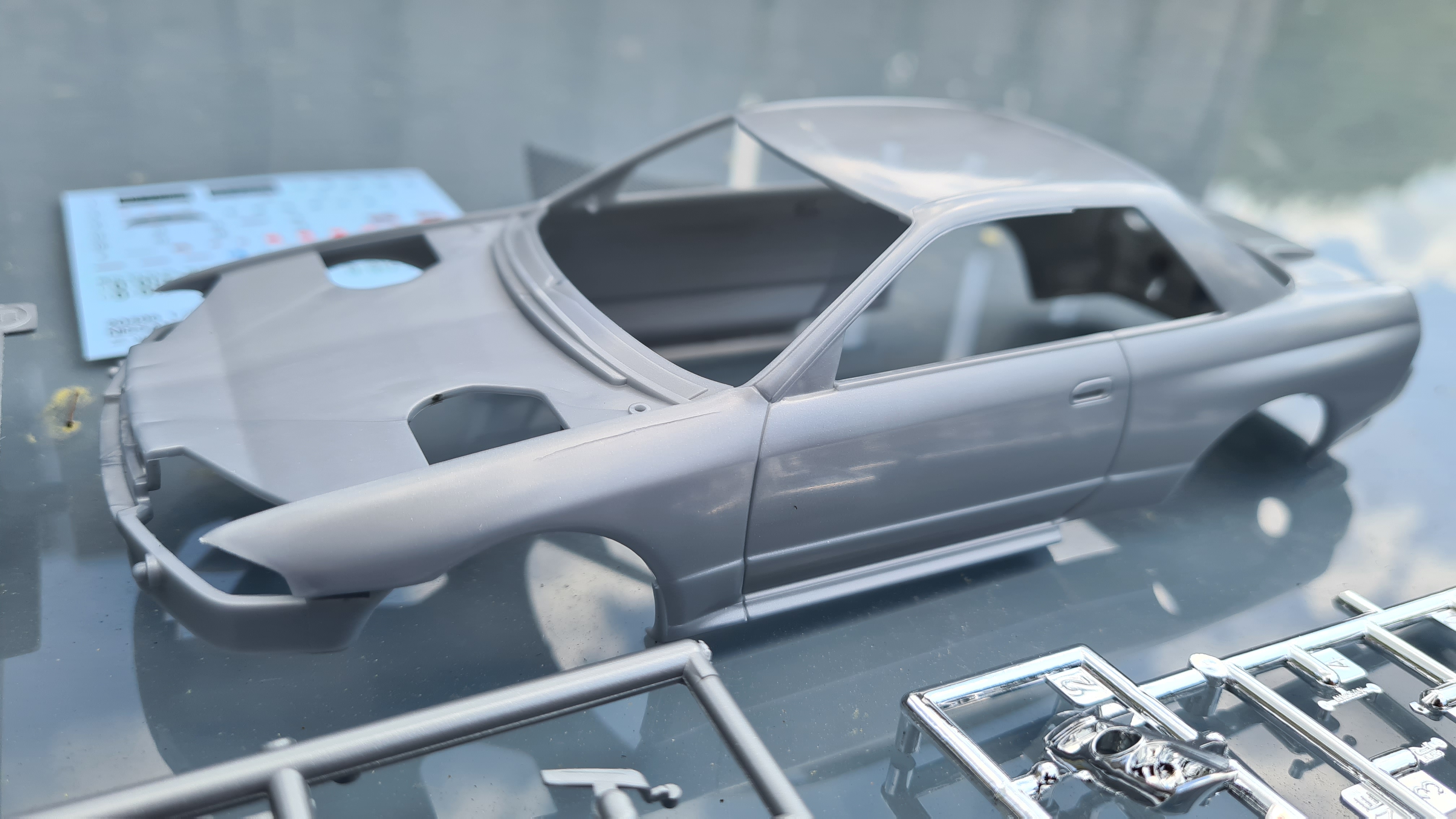

So they have used the year well to sprinkle all sorts of releases out there. Now around June 2020, when the kit was announced by Hasegawa, you would’ve assumed it was eye-roll city with everyone having the same thought? Another Goddamn Skyline? You’d think that, yeah, but you’d be wrong! It turns out, it was quite well beloved when the first prototype images were shown. “Finally, a detailed GT-R that won’t be a drag to paint and it might even look the part”, was one post on a forum. Another mentioned that with Hasegawa’s insane eye for exterior detail, this one might be the best one yet. Folks went with the mind set that it looks like a proper updated and a ton more fun to put together kit of this time and not an aging blob of plastic or the still extraordinarily fiddly Tamiya kit. The Tamiya kit though, it holds up and it is balls to the wall cheap. So if its an engine-displaying model you want, you do yourself no harm getting the GT-R NISMO kit of theirs. Though Hasegawa has done what Hasegawa does with the R32 and that is making it a pleasant kit to put together with all the fiddly, tiny details that we can create thanks to today’s technology.


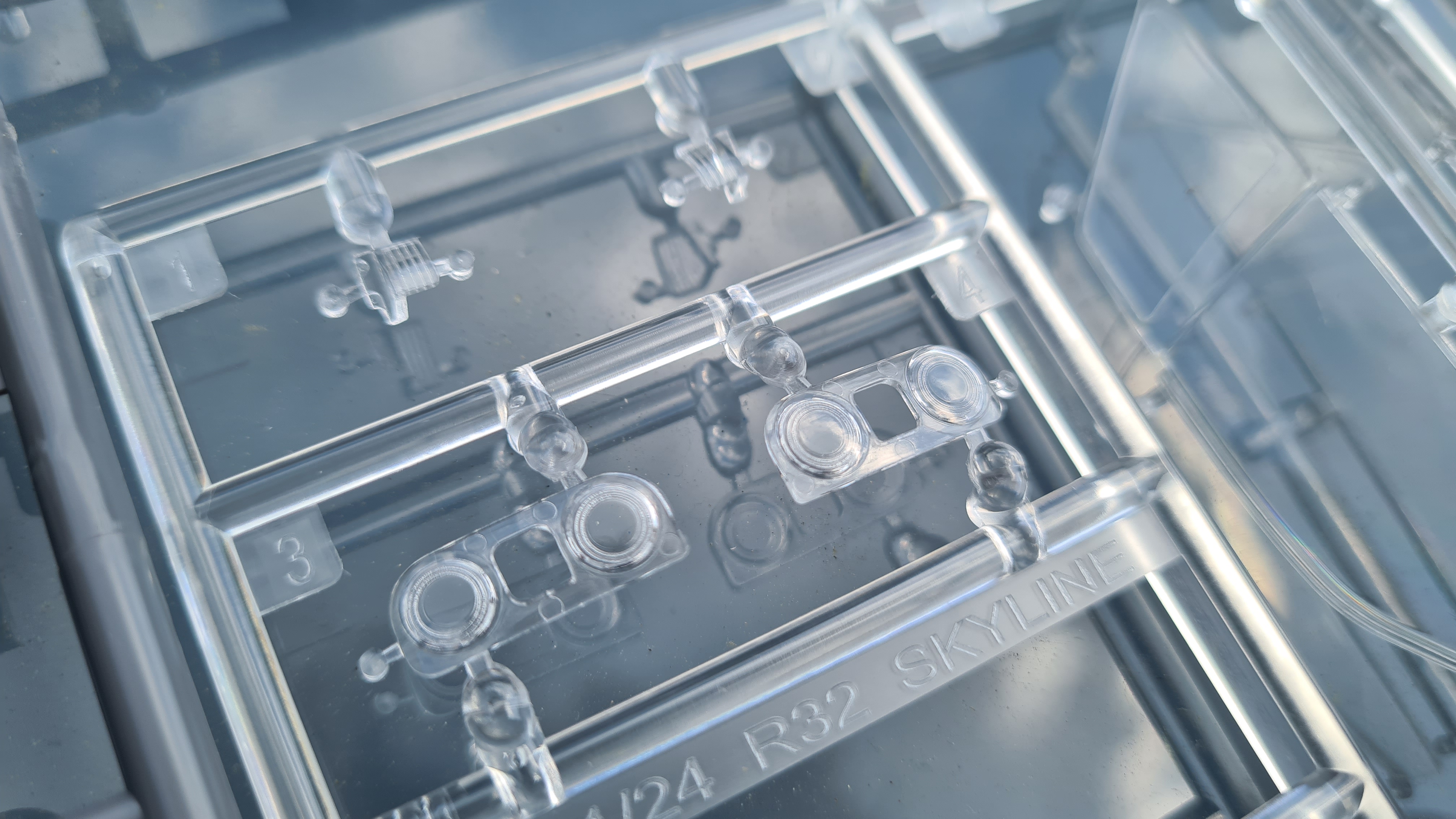
Another piece I wanna push some attention to is the above shown clear tree. Specifically the taillight assembly and the reverse lights. I’ve said before on the article about the ’87 Bluebird SSS-R is that there’s something uniquely realistic about how Hasegawa handles head and tail light detail. I personally feel that the incredibly complex set-up of a headlamp or taillight assembly can make a model look like a toy or like a small real thing. Often its just a piece of transparent plastic with a flat surface behind it in most kits, sometimes there’s some depth or a separate headlight bucket, but then the taillights still see the same treatment as a flat insert piece. Hasegawa continues their trend of giving the headlights and taillights some stellar fuckin’ detail. For instance, the jarringly unique tail lights of the ’89 GT-R is two separate lenses with a handy ridge for a flat-red decal(or some circular red paint if you wanna make life harder on yourself) that you paint transparent red with the decal underneath, after which you put in the turn signal lens that has to be painted with some smoke black/transparent black. It makes the whole thing infinitely more real looking, it’s just two extra steps that make a world of difference.




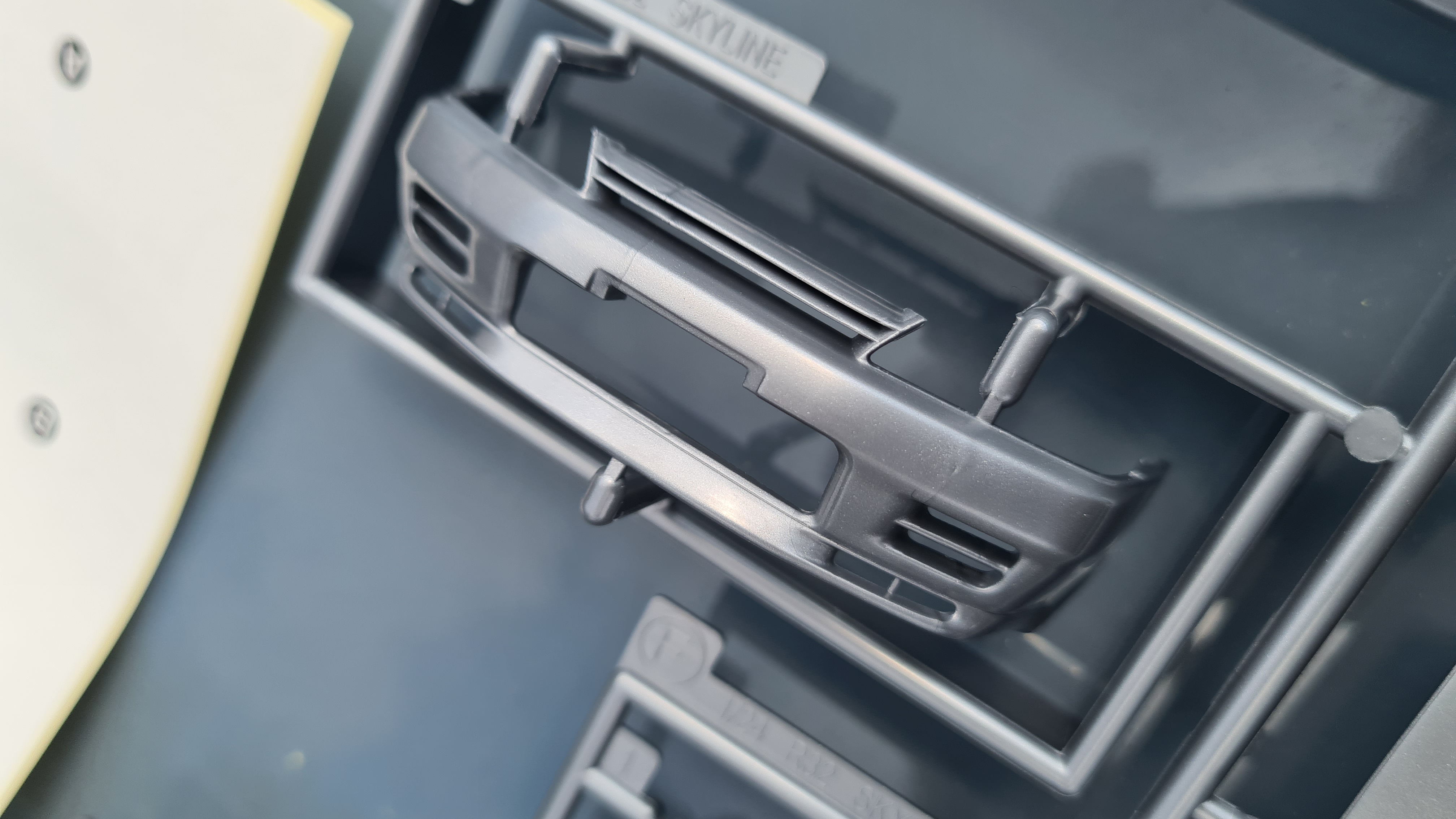

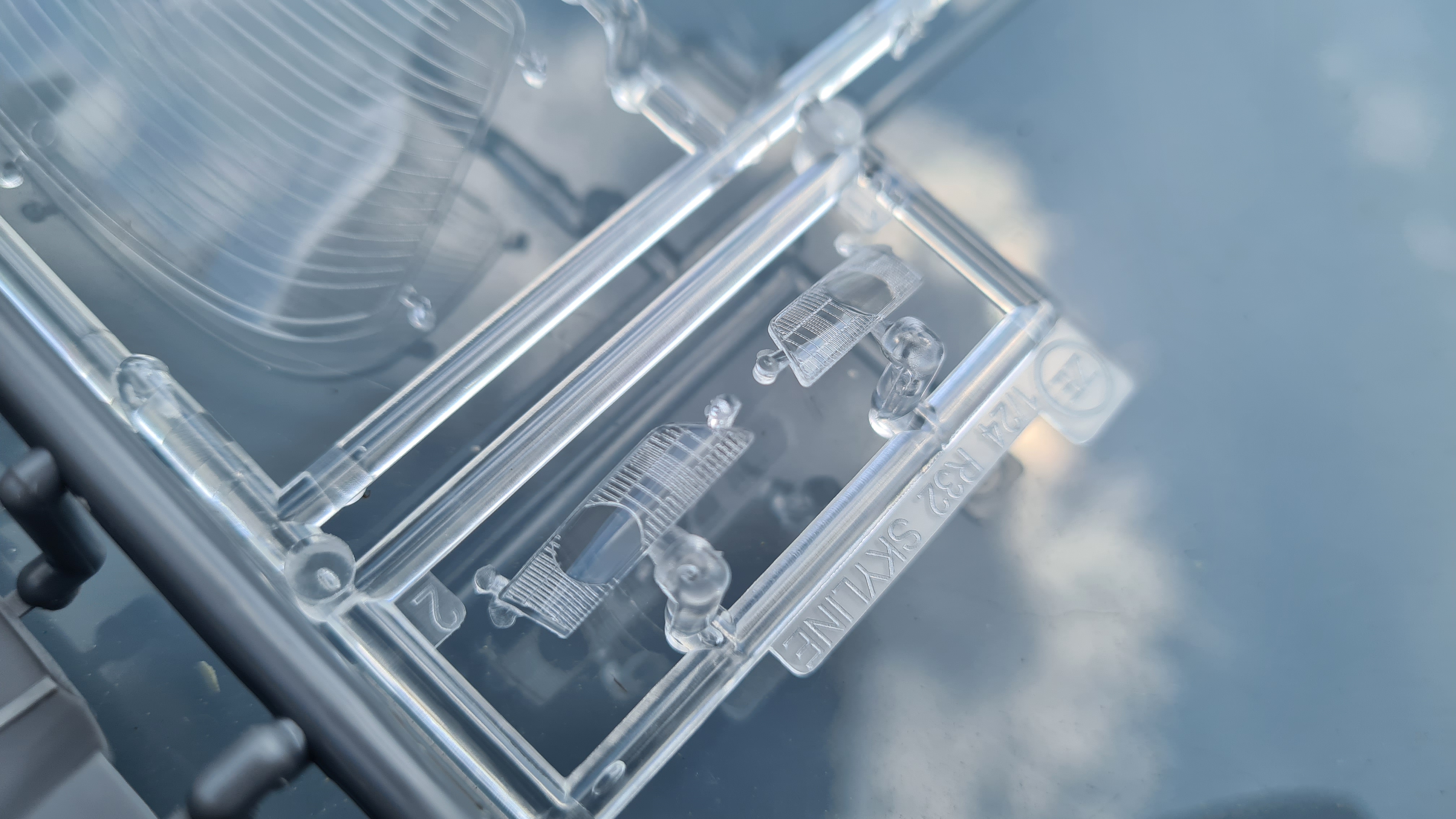

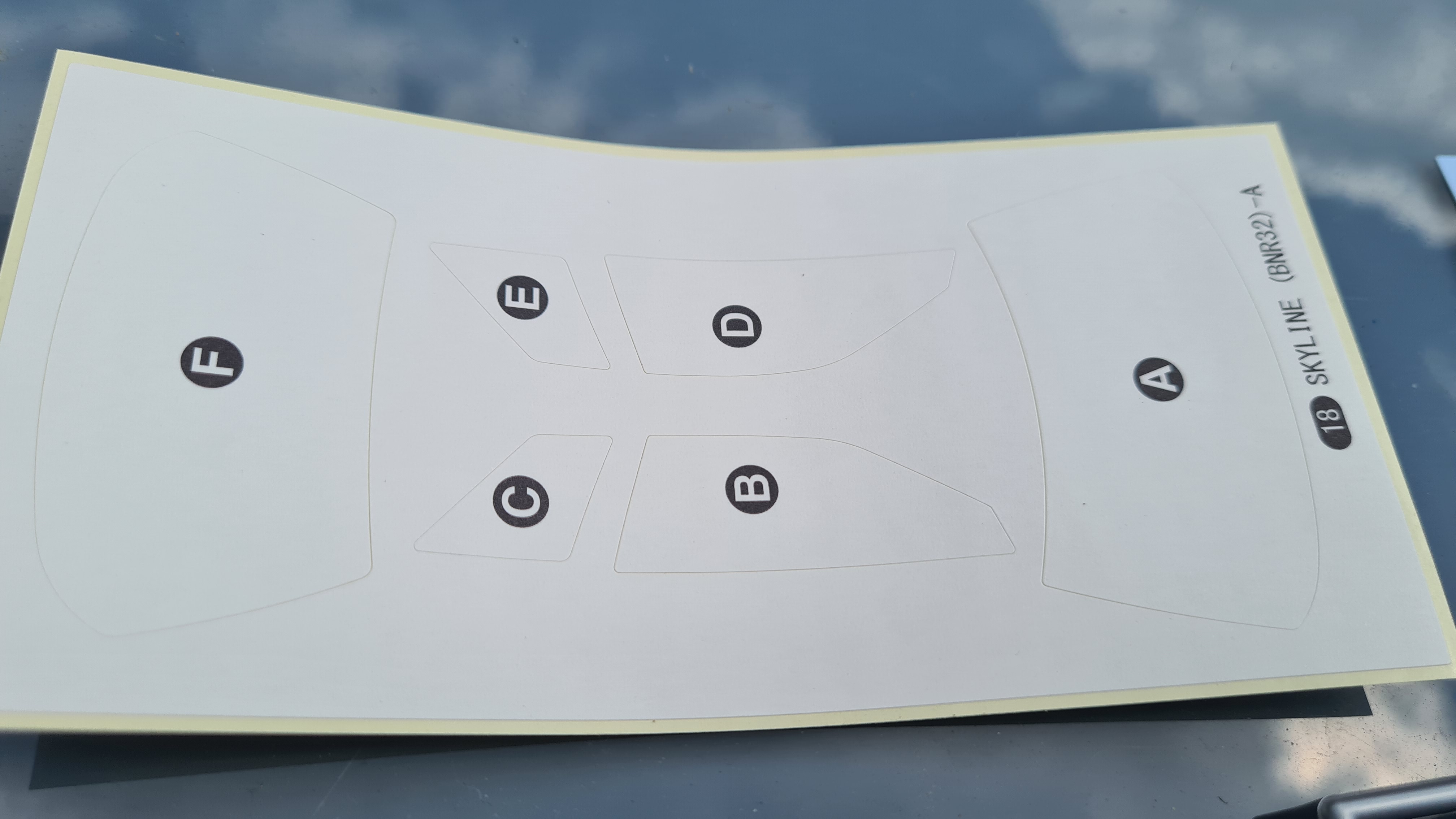
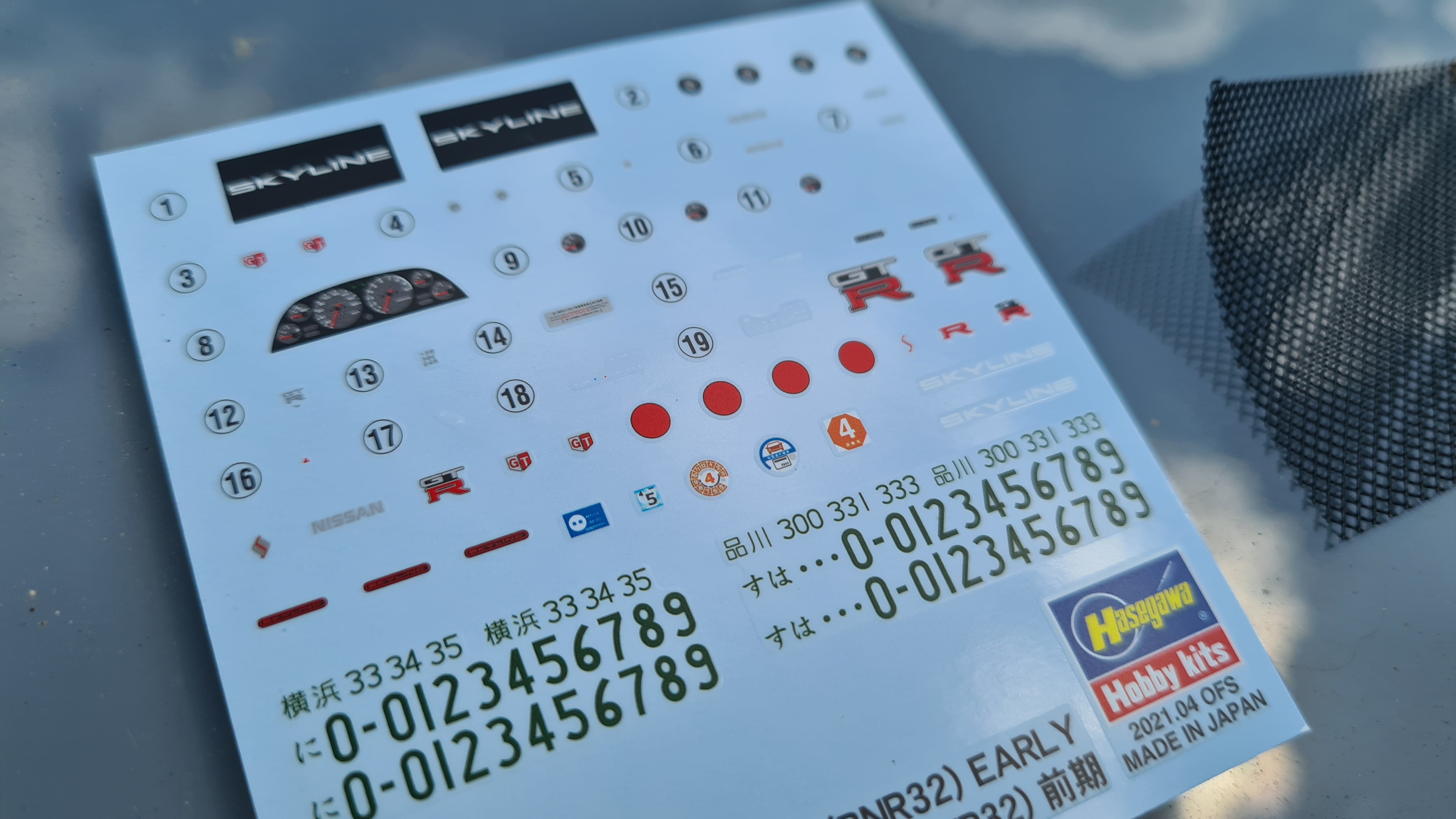


THE CAR


That being said though, the GT-R name did get shelved for nearly two decades as a whole. It was by no means less the GT-R than it was, but since 1978 it was a GTS or a GTS-R, but no true GT-R as the Kenmeri lovers know and adore. With every iteration, the Skyline brought new tech that became a staple of the industry and the revival of the 1989 Skyline GT-R was no different. The project was spearheaded by Naganori Ito, it genuine lauded in the revival of the Skyline as a world renowned car. See, in 1985 when the R31 Skyline came to be, it was actually quite disliked. Of course there were kind words for it, but in the highly competitive world of Japanese car culture it was a bit of a dud. The styling wasn’t much loved, even though its predecessor’s strongest point was the so called “Iron Mask” front end. The ride wasn’t as great as folks wanted, it did do quite okay on circuits but it fell short of expectations, generally the opinion was a remorseless ‘meh’. Ito, a Nissan engineer and designer for thirty years by 1989, has claimed the feedback on the R31 that was engineered by his tutor Shinichiro Sakurai was the entire motivation beyond bringing back the GT-R nameplate and aiming for the fuckin’ stars when it came to success. First, they re-engineered the RB engine once(now called the RB26DETT) again to now pump out a mind-stomping 316 horsepower. It race spec, which was its original shape, it would produce 500HP but the street exhaust, tuned down ECU and boost restriction made sure you wouldn’t be powering into a storefront by tapping the gas pedal. In street outfitting, it still would hit the 60MPH mark within 4.7 seconds. That’s… quite remarkable.


It honestly is just such a ridiculously famed car, from its roots through its success and via its successor. The R33 Skyline would be equally dominant in Group N racing, specifically taking fifty victories out of fifty starts, more than half of which were the R33. The R34, which in my humble opinion is the magnum opus of Skylines that grabbed both the angular aggressiveness of the eighties Skyline and the modern, timeless rounded edges of the R31 and R32 that literally could’ve been put on the market anywhere between 1997 and 2022 and I’d still find it difficult to pin down just from what era that damn car hailed from.
THE MODEL
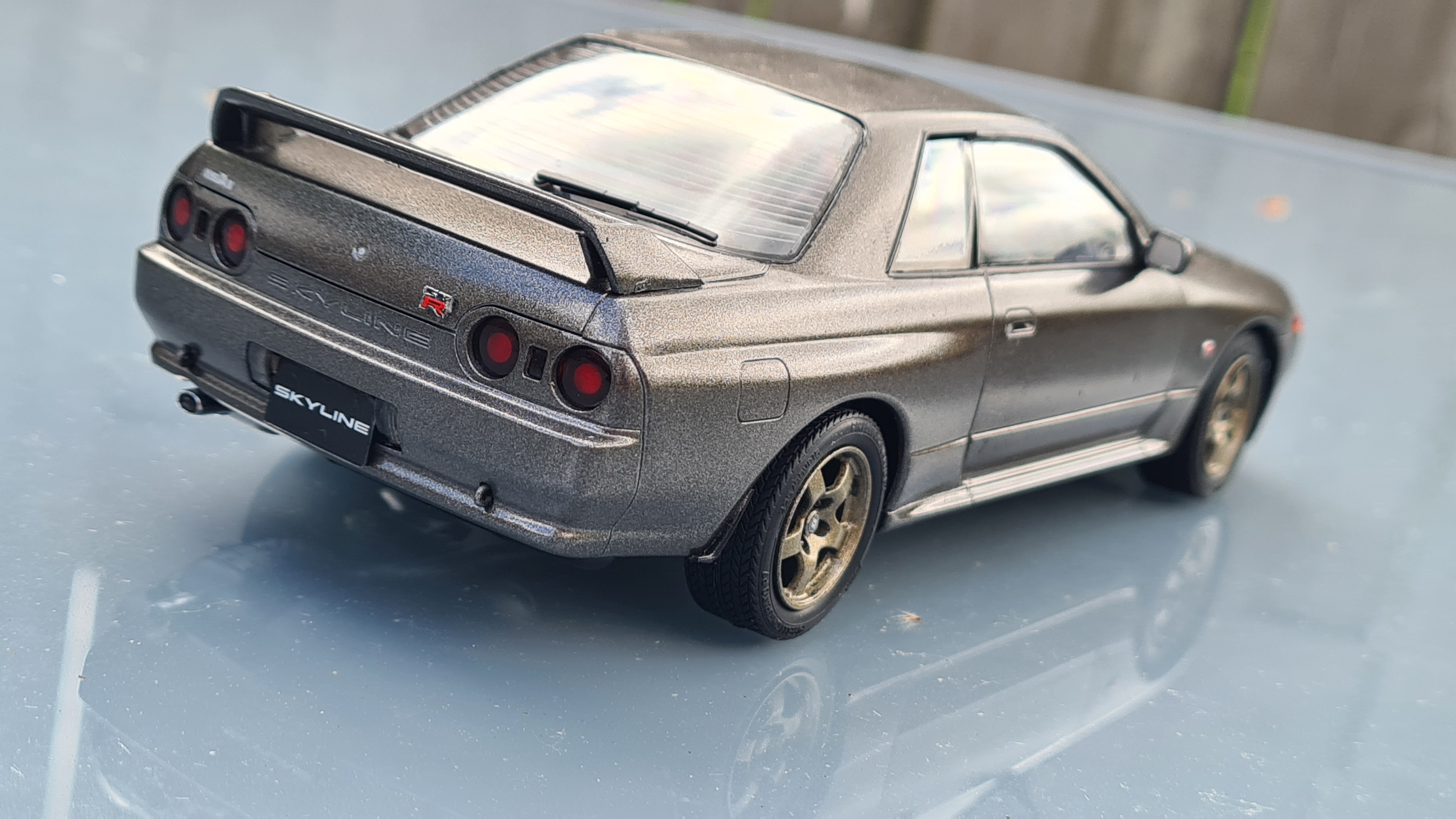


Now, how does this compare to the other staple Hasegawa HC-Series releases? Well it fits right in like a glove. It builds great, little hassle, great deal of super detail and above all it just goes together nicely. Granted, there’s some niggles, there’s always niggles and I’ll get to those shortly. First the good, and there’s a lot of it. Comparatively to say the Tamiya R31 kit with the RB engine, or the Aoshima offerings, this one reigns supreme. At the end of the day, they’ll all make excellent models and they’ll all look the part. The only true and quite the stark differences is in how they go together. Tamiya’s was never bad, not by a mile. Its greatest difficulty was detailing it properly. It went together smoothly and it bore the most realistic efforts with the least difficulty, while the Aoshima kit doesn’t lag that far behind but suffers quite badly from soft details and glancing oversights. The interior is a lot less detailed and a lot more flatly put together and Tamiya’s is mostly a one piece ordeal that you tank the chassis into and done.


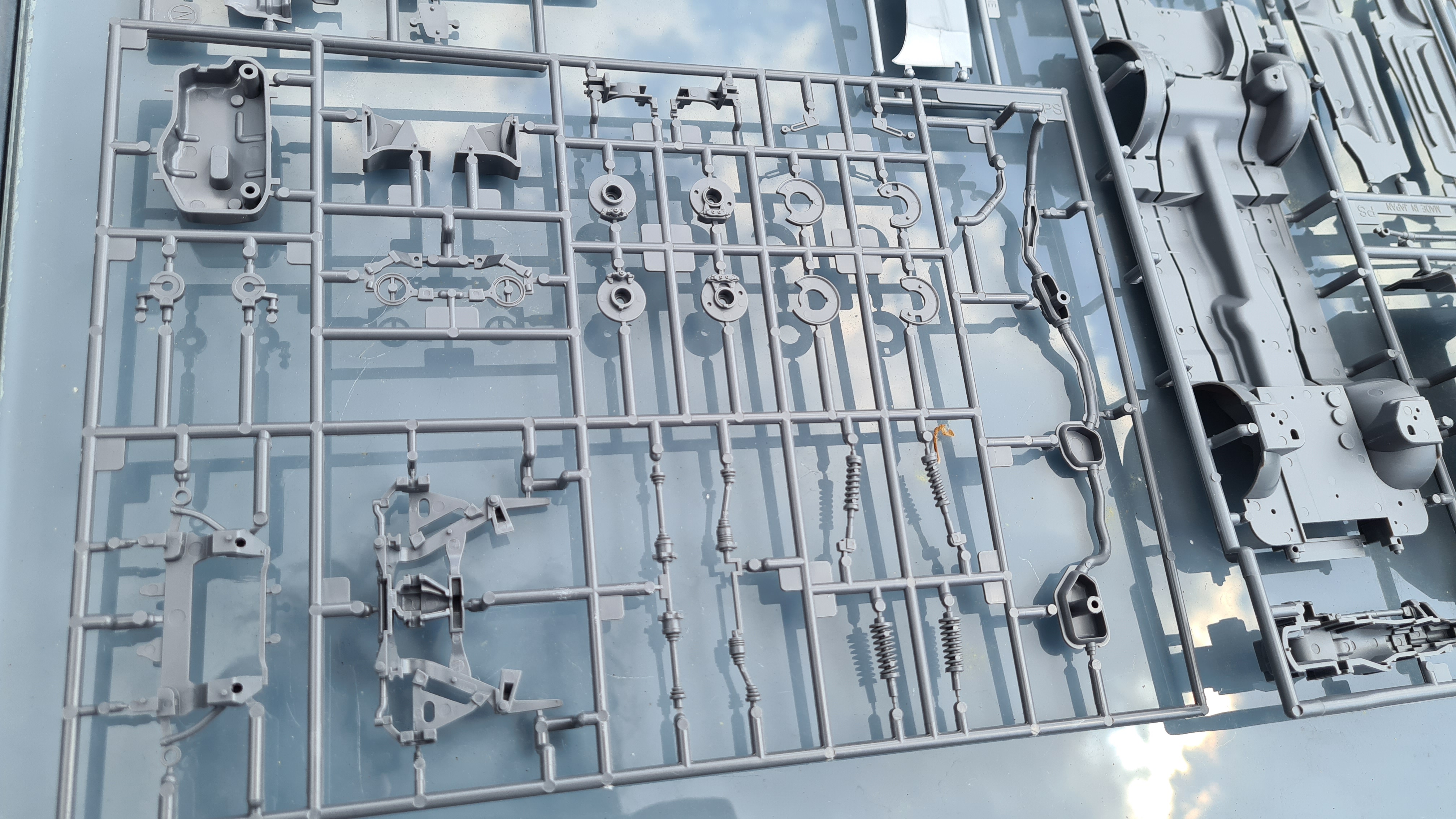
Another place where the Hasegawa kit shines is underneath. For some reason, and I always forget to fucking photograph this, Hasegawa makes up for a lack of a engine bay by cranking up the detail to the chassis to again just an unreasonable degree. There’s some overlooked details like the cables running along the side of the frames and whatnot but its easily forgiven. The stance and ride height are perfect, they match the real deal by default perfectly and the only real issue I can say I had with the underbody is that the steering mechanism to pose the wheels is a little crappy. The steering arm has no resistance so it just bends when you try to pose it and the tires rub against the body underneath so they just… gradually reset. But oh well. Arguably, this kit really only has three points where I’d argue it could do with improvement or some looking out for. One is the headlamp assembly. Basically, you push the chrome bezels in through the rear before installing the front bumper. Good so far, okay. Now, the bumper touches the chrome bezels so they meet perfectly, right no problem. Set and dry, and then you place the glass for the main lights and the indicators. Here’s where it becomes kind of… fucky. See, they just kind of… sit on the headlight bezels and the bumper. No support, no locators, no small pins, no positive guidance, just place them on there and smoosh them in place with glue. Eventually it sets kind of okay, but this kind of screwed up the headlights for me as I sought to place them, they slid all over the place due to the wet glue and ran the black edges down.


Suffice to say though, this is by no means my perfect model. I fucked up so many things, I made the tail lights far too dark and I screwed up the trim on several places and of course the headlights look a little off. Oh, and I lost the Nissan logo for the trunk. But second chances a comin’! I got the BNR32 Skyline with the updated headlights in the pipeline so… I’ll take my lessons and see them through on the new one. Also, the year of Hasegawa continues! It’s been… two years and three months, but just like COVID-19 – in our hearts, we never left 2020. Speaking of updates, I’ll make a brief mention of it here but sooner or later there will be a post dedicated to it but our decal shop is actually functionally online now! It took a ungodly amount of effort on part of me and my girlfriend, the lady responsible for chatting with you when you make a purchase and a vast array of other tasks but we’re finally rolling. The whole ordeal should be less of a hassle, now ordering a set is just a matter of a few clicks. Enjoy!


’89 Nissan Skyline(BNR32) GT-R specifications:
Kit: #20496
Skill Level: N/A
Parts: 123
Molded in: Metallic Silver & Black
Scale: 1/24